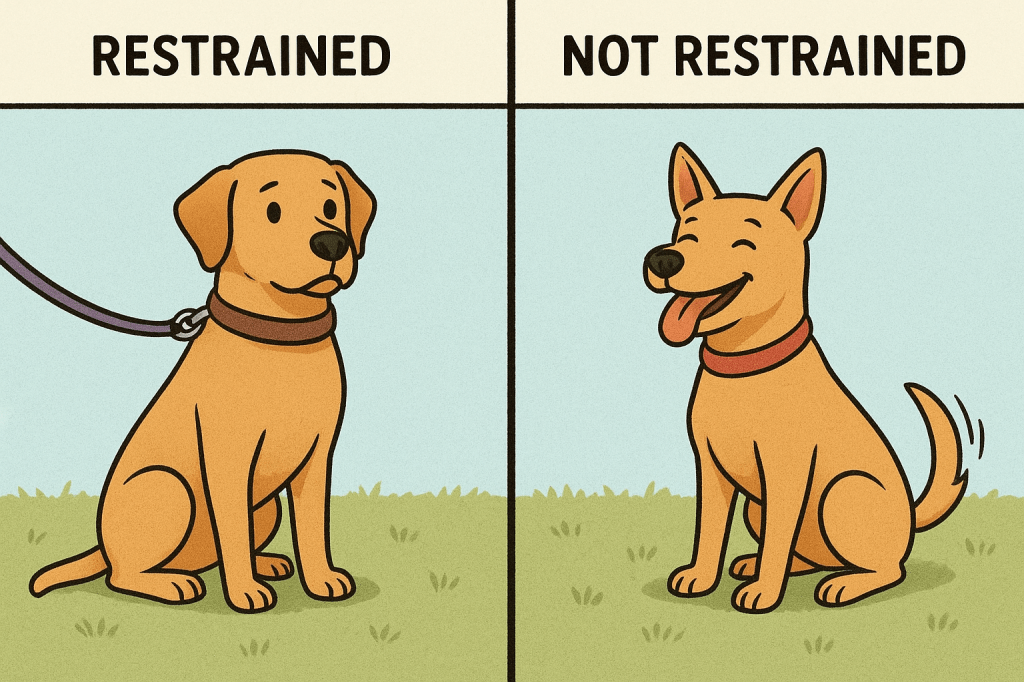
An image that shows a dog being restrained vs. a dog being free and happy
As pet parents, we want what’s best for our furry friends. Sometimes, out of concern for their safety—or our own convenience—we might consider restraining them. Whether it’s keeping a dog tied up in the backyard, confining a cat for too long, or using restrictive methods during walks, it’s important to understand why restraint can do more harm than good.
1. Pets Deserve Freedom of Movement
Dogs and cats are naturally curious, active creatures. Restricting their movement for long periods can lead to frustration, boredom, and even depression. Just like humans, they need the ability to stretch, explore, and express themselves.
2. Restraint Can Lead to Behavioral Issues
When animals are restrained, they often develop stress-related behaviors such as excessive barking, chewing, scratching, or aggression. This isn’t “bad behavior”—it’s their way of expressing unmet needs.
3. It Can Harm Their Physical Health
Constant restraint can cause physical problems, including joint stiffness, muscle weakness, and even injuries from collars, chains, or harnesses. Pets need regular exercise to stay strong, healthy, and happy.
4. Emotional Wellbeing Matters
Pets are family. When they feel trapped, ignored, or restricted, their emotional wellbeing suffers. A happy pet is one that feels safe, loved, and free to move around in an environment suited to them.
5. There Are Better Alternatives
Instead of restraint, consider these options:
Secure play areas: A fenced yard, catio, or safe indoor play space. Regular walks & exercise: Dog walking, enrichment games, or playtime. Mental stimulation: Puzzle feeders, training games, and interactive toys.
By meeting your pet’s physical and emotional needs, you’ll create a stronger bond and a happier home.
✅ Takeaway: Pets aren’t meant to be restrained. They thrive when they’re free to explore, play, and interact with the world safely. If you wouldn’t want to spend your day tied up, neither does your pet.
 Pawfect Walks and Sitting
Leave a comment